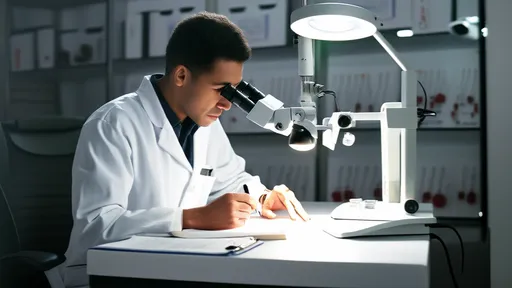
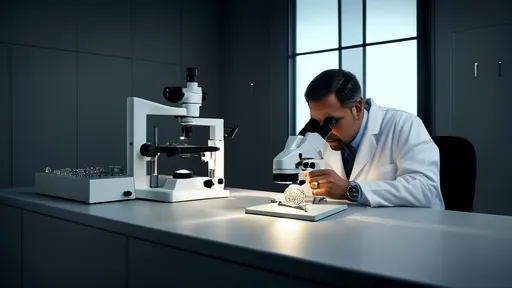
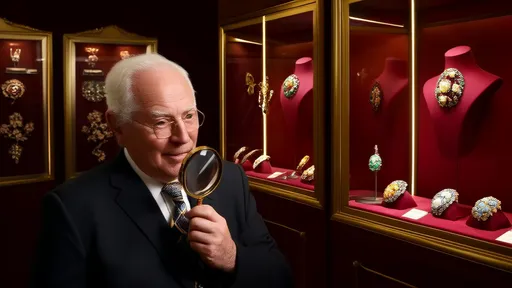
In the hushed, temperature-controlled laboratory, every surface gleams under the sterile white light. Here, amid the hum of high-powered microscopes and spectral analyzers, the world’s most coveted treasures are stripped of their stories and reduced to elemental truths. This is the domain of the gemologist, a modern-day detective whose work is less about glamour and more about resolving the silent, high-stakes disputes of authenticity. I spent a day with Eleanor Vance, a veteran gemologist with over thirty years of experience, to understand the intricate dance of science, art, and human nature that defines her profession.
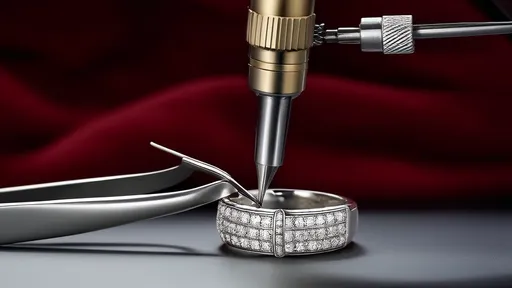
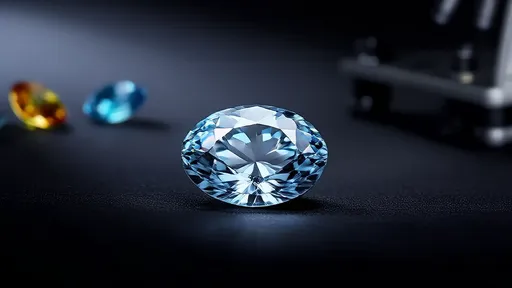
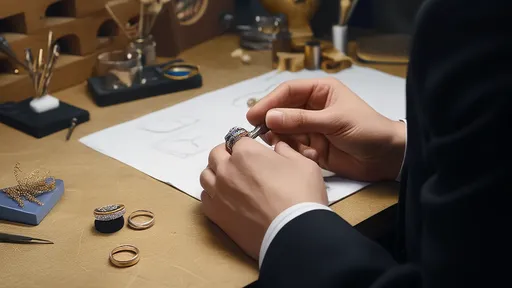
Eleanor’s morning began not with a spectacular gem, but with a file. A client, an elderly gentleman, had brought in a ring passed down through three generations. Family lore insisted the central stone was a rare pink diamond, a beacon of their heritage. The man’s hope was almost a physical presence in the room. Eleanor handled the ring with a practiced, reverent delicacy, but her eyes were already analytical, missing nothing. Under the microscope, the story began to unravel. The stone’s inclusions—the internal fingerprints of a gem—were wrong. The play of light, the specific way it refracted, was off. A quick test with the refractometer confirmed her suspicion. It was not a diamond, but a synthetic spinel, a very good one, likely from the mid-20th century. Delivering this news was the first, and often the hardest, part of her day. "You are not just telling someone a stone is fake," she explained, her voice soft but firm. "You are unwriting a family legend. You have to be a scientist with the data and a psychologist with the person."
The afternoon brought a more complex case, a true "Rashomon" of gemology where multiple expert opinions already clashed. A spectacular emerald, over ten carats and set in a contemporary platinum necklace, was the subject of a bitter insurance dispute. The owner’s appraiser had declared it natural and valued it astronomically. The insurance company’s expert, however, had flagged it as potentially treated or even synthetic, seeking to drastically reduce the claim. The necklace sat under the light, a beautiful, silent defendant. Eleanor’s process was methodical. She started with standard tools: the microscope revealed clarity characteristics that suggested natural formation, but she noted evidence of resin filling in surface-reaching fractures—a common treatment to improve the appearance of emeralds. This was already a point of contention; the level of treatment significantly affects value.
The plot thickened under the advanced spectrometer. The machine analyzed the light absorption of the stone, providing a chemical fingerprint. The data indicated trace elements consistent with Colombian emeralds, supporting its natural origin. But another reading suggested the type of resin used was a modern polymer, not one used decades ago when the piece was supposedly crafted. This created a paradox: a seemingly old stone with a very new treatment. "This is where it becomes a detective story," Eleanor murmured, her focus absolute. "Is it a natural stone that was recently enhanced to commit fraud? Or is the setting itself not as old as claimed? Every piece of data is a witness, but some are lying."
Her investigation expanded to the metalwork. Using X-ray fluorescence, she analyzed the platinum alloy. The specific composition of iridium and ruthenium used as hardening agents pointed to a manufacturing date that did not align with the purported era of the piece. The evidence was building a new narrative: a natural, but relatively modern, emerald that had been heavily treated and set in a contemporary piece, which was then misrepresented as a vintage treasure. Eleanor meticulously compiled her evidence—photomicrographs, spectral graphs, and elemental analyses. Her report would not just state a conclusion; it would present the undeniable scientific testimony that resolved the mystery.
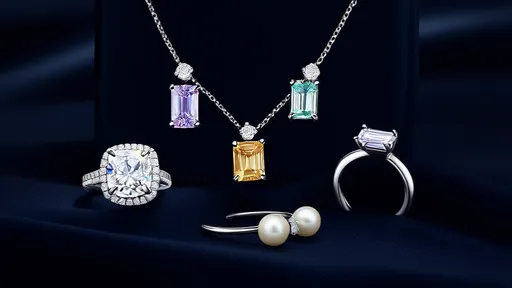
Between these intense sessions, the lab received a steady stream of items: a "sapphire" brooch that turned out to be glass, a "vintage" signed piece whose hallmark was microscopically re-engraved over a newer one, and a pair of "natural pearl" earrings that were, in fact, exquisite cultured pearls. Each object arrived with its own attached story, a projected value, and an owner’s emotion. Eleanor approached each with the same impartial rigor. "The lab is a truth chamber," she said during a rare coffee break. "The stones don’t lie. Their atomic structure doesn’t care about provenance papers or emotional attachments. Our job is to listen to what they are actually saying, not what people hope they will say."
As the day wound down, Eleanor reflected on the evolving challenges of her field. The rise of lab-grown diamonds and other synthetics, which are physically and chemically identical to their natural counterparts, is the new frontier. "The difference now is at the atomic level, tracing minute patterns of growth that require immense magnification and sophisticated instrumentation to detect," she explained. The battle between creators of fakes and the gemologists has escalated into a high-tech arms race. Furthermore, the emotional toll is constant. She recalled a young couple whose engagement ring stone was a fake, sold to them as real. "You see the heartbreak. You have to be the bearer of truth, but you also have to be human. You give them the facts, and you help them understand what they actually have, which sometimes is just a beautiful piece of jewelry, even if it's not what they thought."
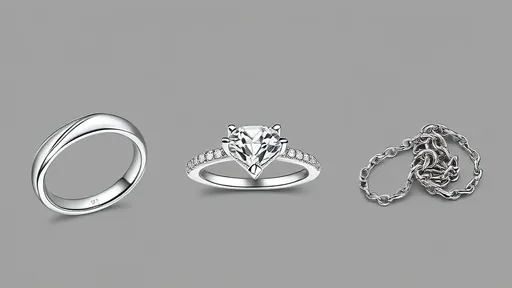
My day in the lab concluded with a final, poignant case. A woman brought in a simple locket she had bought at a flea market for a few dollars. She liked its weight and feel. To everyone’s astonishment, including Eleanor’s, the locket was not gold-plated brass but solid 18k gold, and the tiny, cloudy diamond chips surrounding the portrait were real. The value was suddenly a hundred times what the woman had paid. The joy on the client’s face was the perfect inverse of the morning’s disappointment. It was a reminder that in this world of contested truths, sometimes the reality is better than the story. Eleanor simply smiled, a quiet satisfaction in her eyes. For every shattered heirloom myth, there is a flea market miracle waiting to be found. Her role is not to judge, but to reveal, holding up a scientific mirror to the beautiful, complicated, and often deceptive world of gems.
By /Aug 28, 2025
By /Aug 28, 2025
By /Aug 28, 2025

By /Aug 28, 2025
By /Aug 28, 2025
By /Aug 28, 2025
By /Aug 28, 2025
By /Aug 28, 2025
By /Aug 28, 2025

By /Aug 28, 2025

By /Aug 28, 2025

By /Aug 28, 2025
By /Aug 28, 2025

By /Aug 28, 2025
By /Aug 28, 2025
By /Aug 28, 2025
By /Aug 28, 2025
By /Aug 28, 2025

By /Aug 28, 2025
By /Aug 28, 2025
